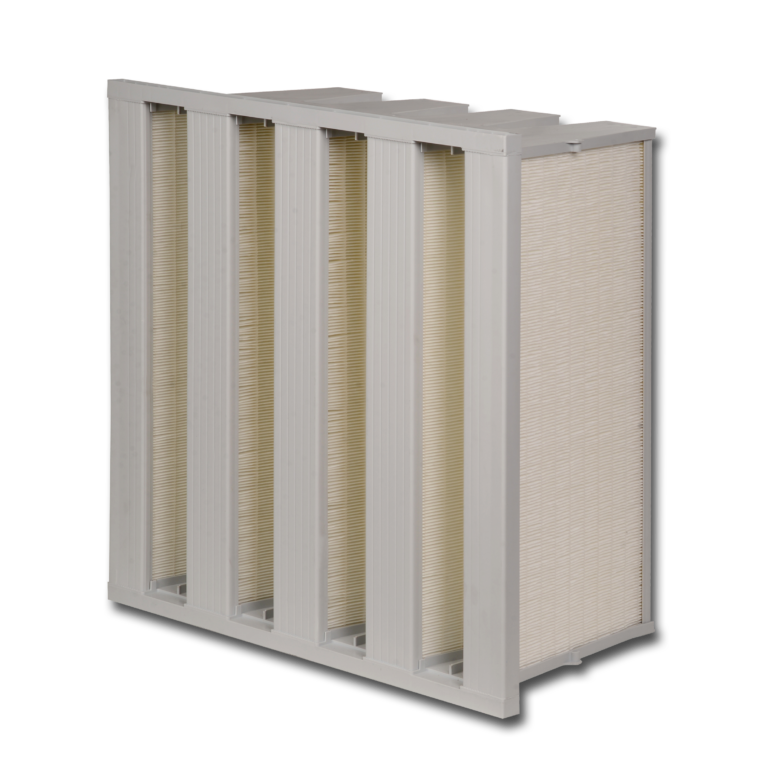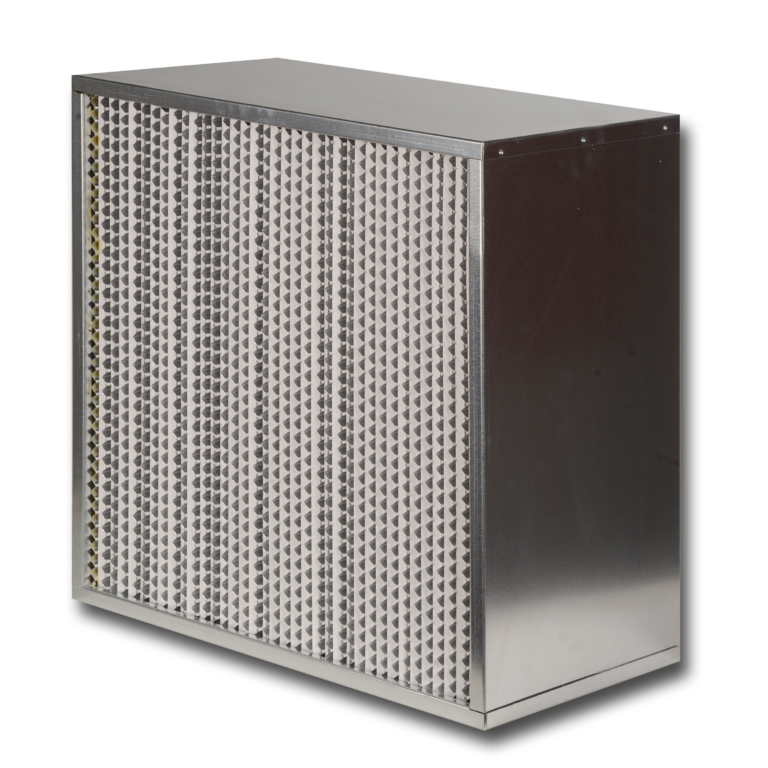
For a food factory's ventilation filter, a generic request for a “food-grade certificate” does not define what needs to be proved. Start with the filter's location, the food exposure and the contamination risks. Then request evidence for the filtration performance, construction and any applicable food-contact requirements.
A gasket material declaration, a filter efficiency report and an air handling unit hygiene assessment answer different questions. Each document needs to cover the product and use you are assessing.
First identify which air system you mean
Food plants use air in several ways. Building ventilation supplies occupied and production spaces. Process air may contact the product as part of manufacturing. Compressed air may operate equipment or enter a product-contact application. These duties should not share a specification merely because the word “air” appears in each one.
EHEDG Guideline 47 addresses air handling for food factory building ventilation and air quality control. Its published scope excludes process air supplies, compressed air and certain exhaust systems. ISO 8573-1, meanwhile, classifies compressed-air purity in terms of particles, water and oil. A compressed-air purity designation is therefore not a replacement for the specification of a building ventilation filter. EHEDG Guideline 47 scope, ISO 8573-1:2010
Before asking for a quotation, mark the filter on a simple airflow diagram. Show where the air comes from, where it goes and whether exposed food is present downstream. This helps the supplier and your quality team discuss the same application.
What EU food hygiene rules actually require from ventilation
For food premises covered by the relevant provisions, Regulation (EC) No 852/2004 requires suitable ventilation, avoidance of mechanical airflow from contaminated areas into clean areas, and access to filters and other parts that need cleaning or replacement. It also places food hygiene within a wider system of operator responsibility and procedures based on HACCP principles. It does not turn a filter certificate into approval of the whole production environment. Regulation (EC) No 852/2004, Article 5 and Annex II, Chapter I
Before selecting the filter class, review how the installation will be kept clean. Can the housing be cleaned? Can the filter be changed without exposing the clean side to accumulated dirt? Does the gasket fit the seating arrangement? Will cleaning expose the filter or frame to moisture or chemicals?
These questions connect the filter purchase to the plant's hygiene plan. They should be resolved before selecting a construction solely because its brochure uses the word “hygienic.”
Does Regulation 1935/2004 apply to an air filter?
It depends on the intended and foreseeable use. Regulation (EC) No 1935/2004 covers materials and articles intended for food contact, already in intended food contact, or reasonably expected to contact food or transfer constituents to it under normal or foreseeable conditions. For an air filter, assess that scope against the actual application. Being an HVAC product does not automatically exclude it; being installed in a food factory does not automatically include it. Regulation (EC) No 1935/2004, Article 1
A remote filter serving a general building area and a filter supplying air towards exposed product need different reviews. Distance alone does not settle the question. Assess whether substances from the filter can reasonably be expected to reach the food under normal or foreseeable conditions of use. Record how that conclusion was reached.
Where food-contact rules apply, the relevant material-specific measures and national provisions also need consideration. For plastic food-contact materials covered by Regulation (EU) No 10/2011, the Commission describes a declaration of compliance used to communicate the relevant information through the manufacturing chain. Supporting documentation must substantiate that declaration and be available to enforcement authorities on request. “Suitable for food” without an identified material, use and legal basis is not an equivalent explanation. European Commission: food-contact legislation
Ask for evidence that covers the complete filter
An air filter can include media, a frame, adhesive or potting compound, separators and a gasket. A document describing one constituent does not automatically establish the suitability of that complete combination for a different use.
Ask the supplier exactly what each document covers. If a declaration concerns a seal, record that limit. If a test covers the completed filter, check its model, construction and stated conditions. If a claim covers an air handling unit, check whether it includes the proposed filter and installation configuration.
| The question to resolve | Useful evidence to request | What it does not establish by itself |
|---|---|---|
| Does the filter provide the specified particle removal? | Declared class, applicable test standard and performance report | Suitability of every material for food contact |
| Does it fit and seal in the installation? | Dimensions, drawing, gasket arrangement and installation instructions | Hygiene of the complete ventilation system |
| Is the construction suitable for the environment? | Material identification and stated temperature, moisture and chemical limitations | Suitability under conditions outside those limits |
| Is food-contact compliance relevant? | Documented scope assessment and applicable declarations or supporting evidence | A universal approval for every food or process |
| Can the filter be handled and replaced hygienically? | Handling instructions and a plant-specific maintenance procedure | Correct execution of that procedure on site |
| Can the supplied product be traced? | Model identification and the agreed batch or serial documentation | Performance claims beyond the referenced product |
Scroll the table sideways to see all columns →
Use this checklist to find missing evidence. A certificate can answer only the questions within its scope.
Put the filter into the plant's hygiene plan
EHEDG's public guidance on food plant air handling emphasises product risk, hygiene zones, appropriate equipment and maintenance. It also highlights inspection and replacement when technical or hygiene deficiencies are observed. Filter choice belongs within that overall approach. EHEDG: food plant air quality and control
For example, imagine a specification prepared for a packaging room where the product is already sealed. Now suppose the same specification is copied into an area handling exposed product after its final treatment. The filter may be identical, but the consequence of a contamination event is different. The second area deserves its own assessment rather than a copied approval line.
Review material substitutions too. Tell the team that assessed the original construction if the frame, adhesive or gasket changes. Update the product description and supporting documents so they still describe what is being supplied.
VDI 6022 Part 1 addresses hygiene requirements for ventilation and air-conditioning systems and units. If a specification asks for evidence against it, identify the product and the aspects actually assessed. A reference to VDI 6022 should not be presented as a blanket food-contact declaration. VDI 6022 Part 1:2018-01
A better request to send your filter supplier
Describe the application before listing the documents:
“The filter will serve this production area at the stated airflow. Food is exposed at these downstream points. Please confirm the proposed filter construction, performance class, dimensions, operating limits and available test documentation. Identify any food-contact requirements relevant to the intended use and provide the evidence supporting the specific claims made.”
Questions from purchasing and quality teams
Does H14 mean a filter is food grade?
H14 is a filtration classification. It does not describe every material in the filter or establish suitability for every food process. Ask for the performance evidence and the application-specific construction assessment separately. EN 1822-1:2019 scope
Is stainless steel enough to establish suitability?
It identifies a frame material, not the complete filter construction or operating conditions. The media, seals, adhesives, installation and intended cleaning exposure still need consideration.
Should we stop asking for certificates?
No. Ask for documents with a clear purpose and scope. Each should help you check an actual requirement or contamination risk in the proposed application.