A HEPA filter does not need CE marking simply because it is sold in Europe, installed in a hospital or tested to EN 1822. CE marking applies when the product falls within EU legislation that specifically requires it. If no such legislation applies, the CE mark must not be used. European Commission: CE marking
First identify what you are buying: a passive replacement filter, a complete powered filtration unit or a product for a special regulated use. Each needs its own assessment, even when all three contain HEPA media.
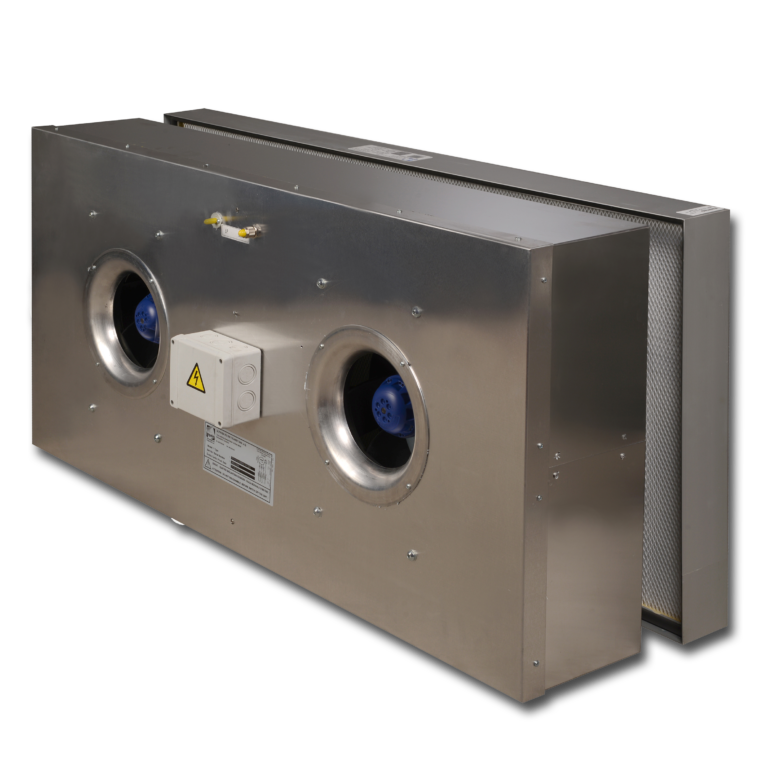
A filter element and a fan filter unit need different assessments
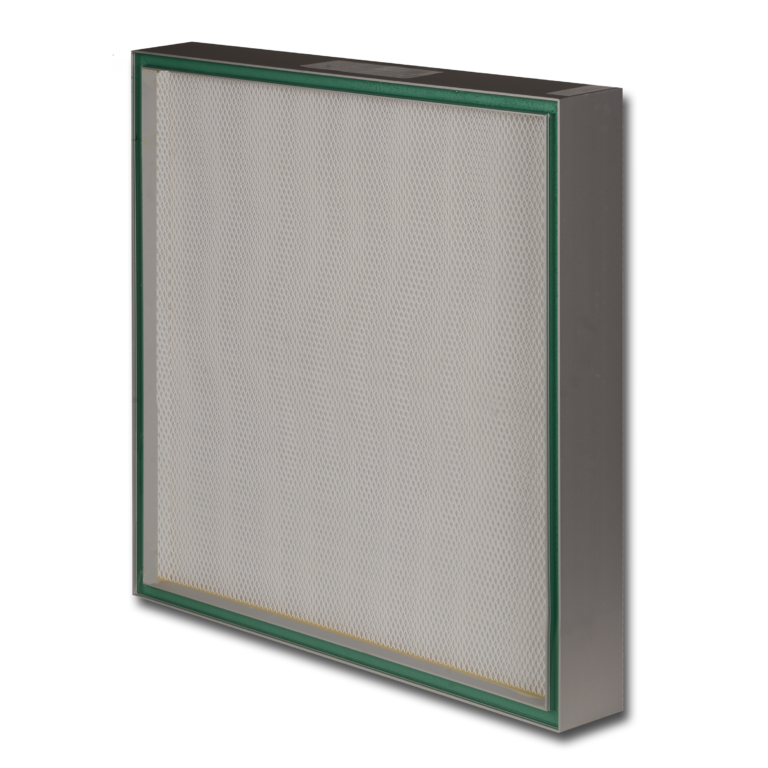
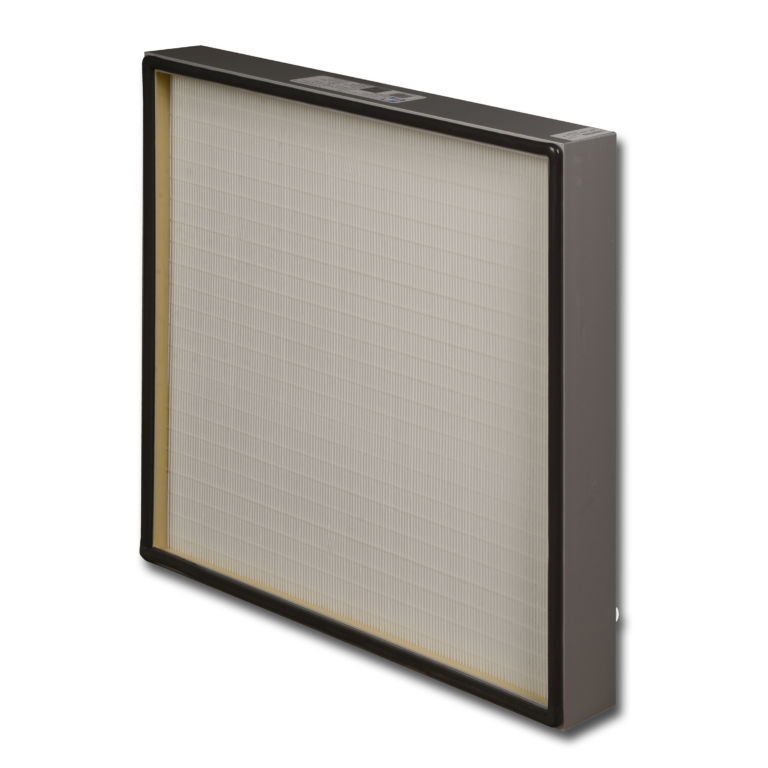
A conventional replacement HEPA element contains filter media, a frame and other supporting parts. Equipment elsewhere in the system moves air through it. Check its filtration class, airflow resistance, dimensions and sealing arrangement.
A fan filter unit adds a fan, electrical components and controls. A laminar airflow unit may add further moving, electrical or control functions. The manufacturer must evaluate the complete supplied product against the applicable product legislation. European rules separately address, among other matters, electrical safety within defined voltage ranges and electromagnetic compatibility. Commission overview of electrical and electronic equipment legislation
The declaration supplied with a powered unit therefore cannot simply be copied onto every replacement filter used inside it. It covers the identified complete unit. A filter test report also cannot prove that the complete unit meets its electrical requirements.
| What the purchase actually covers | What the buyer should establish |
|---|---|
| Passive replacement HEPA element | Applicable product legislation, declared filtration standard, test documentation and installation compatibility |
| Fan filter unit with motor and controls | Conformity assessment for the complete unit, together with the filter's performance evidence |
| Laminar airflow equipment | The supplied configuration, intended use, relevant equipment requirements and filtration performance |
| Filter or equipment for an explosive atmosphere | A separate assessment of the intended application and the applicable ATEX requirements |
| Product marketed for a specific medical purpose | Its intended purpose and regulatory classification, rather than an assumption based on the building where it is installed |
Scroll the table sideways to see all columns →
The table is a procurement checklist, not a classification decision for every possible product. In particular, the ATEX framework addresses equipment and protective systems intended for potentially explosive atmospheres. A standard HEPA class does not answer that assessment. European Commission: ATEX
EN 1822 and ISO 29463 establish filtration performance
EN 1822-1:2019 concerns the classification, performance testing and marking of EPA, HEPA and ULPA filters. ISO 29463-1:2024 likewise covers high-efficiency filter classification, performance, testing and marking within its own series. These are the relevant starting points when a buyer wants to establish what a high-efficiency filter can do. DIN's EN 1822-1 listing, ISO 29463-1:2024
The word “marking” in a filtration standard does not automatically mean a CE logo. It includes how the filter is identified and its performance is stated. CE marking depends on the EU product legislation that applies.
For example, “H14 according to EN 1822-1” identifies a filtration performance claim. To review that claim, a purchaser needs the relevant test evidence, the tested airflow and a clear link between the documentation and the supplied filter. Writing “CE certified” beside H14 adds no missing filtration result.
A complete powered unit may have a valid CE declaration while its filter documents remain incomplete for the project. Ask for both types of evidence when both are needed.
Why a generic “CE certificate” is not enough
CE marking is not a certificate issued by a central EU approval office. The manufacturer has responsibility for identifying applicable requirements and completing the relevant conformity assessment. A notified body participates where the applicable legislation requires it. The Commission also warns that voluntary certificates may have no legal standing for CE marking. Your Europe: obtaining CE marking
When someone offers a certificate, read the product description before the logo. Does it cover the model and configuration being quoted? Does it identify the applicable legislation? Is it a test report, a voluntary certificate or an EU declaration of conformity?
These checks are useful even when the supplier is familiar and the purchase is routine. An old document for a complete unit can travel through several email chains until it appears to cover a replacement component. A clear model reference is more useful than another stamp.
What to request for a standalone HEPA filter
Build the purchase file around the information needed to select, receive and install the filter:
- Identify the product. Record model, dimensions, airflow direction and gasket or gel-seal arrangement. Include a drawing where the existing housing leaves little tolerance for interpretation.
- State the filtration requirement. Name the standard, edition and required class. Do not rely on “high efficiency” or “medical grade” as a complete specification.
- Request the applicable test documentation. Establish what was tested, at what airflow and how the results relate to the supplied product. Agree the required traceability before placing the order.
- Check operating limits. Confirm temperature, environmental conditions, pressure-drop information and handling instructions for that construction.
- Resolve the CE question in writing. Ask the supplier to identify the applicable CE-marking legislation or explain the basis on which it is outside that scope. A specific answer is more useful than a generic request to “send CE.”
Agree the acceptance documents for the application and the contract. A standard ventilation replacement and a critical process filter may need different evidence.
Write a requirement that the supplier can answer
A request such as “Please quote H14 HEPA filters with CE certificates” leaves the scope question unresolved. A better request identifies the filter duty and then asks for the appropriate conformity information:
“Please identify the proposed filter, its declared filtration standard and class, test airflow, applicable test documentation and operating limits. Confirm which CE-marking legislation applies to the supplied product, if any, and provide the corresponding declaration where required.”
That wording gives the supplier a clear request and the buyer evidence to assess. If the purchase also includes a fan, controls or other equipment, list those items so the supplier knows the complete configuration being evaluated.
Questions buyers ask
Does installation in a hospital automatically make a HEPA element a medical device?
The location alone does not decide its classification. Ask how the product is intended and marketed to be used, and request the supplier's regulatory assessment. A medical device's status does not transfer to every component elsewhere in the building. The MDR defines products by their intended purpose. Regulation (EU) 2017/745, Article 2
Can a laboratory issue a CE certificate after an EN 1822 test?
A filtration test establishes results within its test scope. It does not, by itself, establish that CE legislation applies or complete the conformity assessment required for a different product. Check exactly what the laboratory document says it covers.
Should I reject a passive HEPA filter because it has no CE logo?
First establish whether the supplied product is required to carry one. Then assess the relevant filtration, dimensional and operating requirements. Absence of an inapplicable mark and absence of necessary performance evidence are different procurement issues.
Sources
- European Commission: CE marking
- Your Europe: CE marking and conformity assessment
- European Commission: electrical and electronic equipment legislation
- European Commission: ATEX
- EN 1822-1:2019 — official DIN catalogue entry
- ISO 29463-1:2024 — official ISO catalogue entry
- Regulation (EU) 2017/745, Article 2 — medical device and intended-purpose definitions