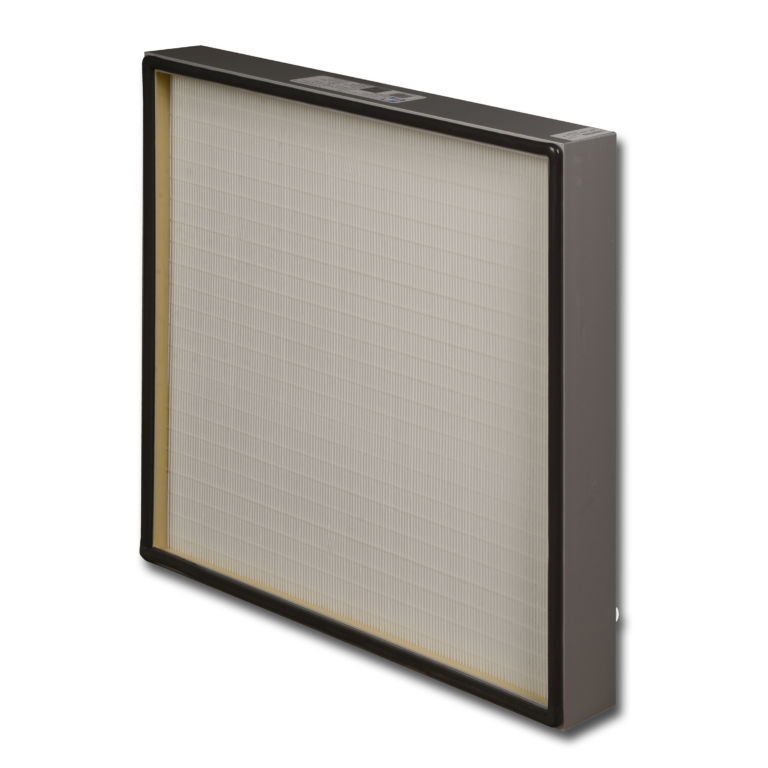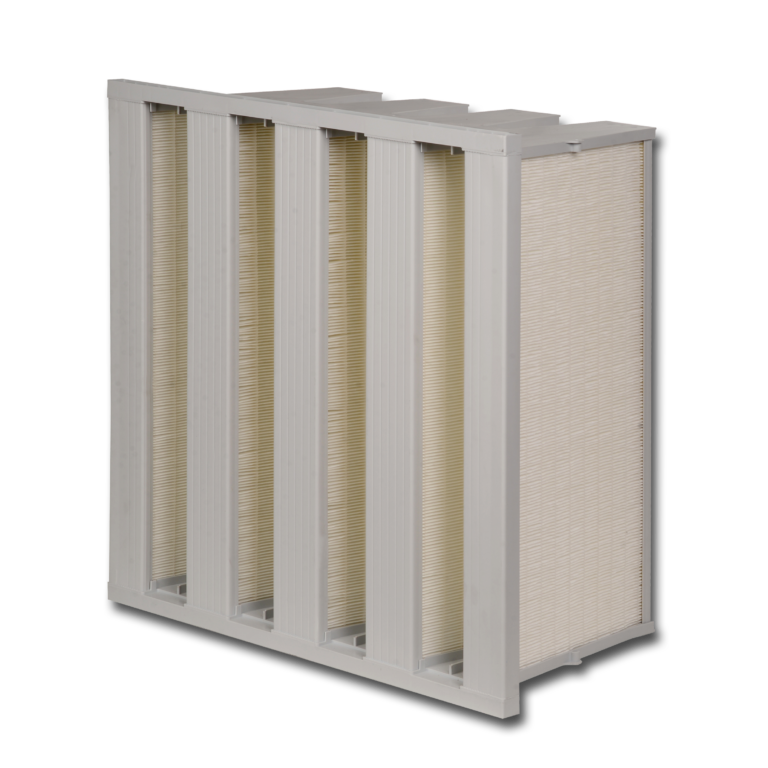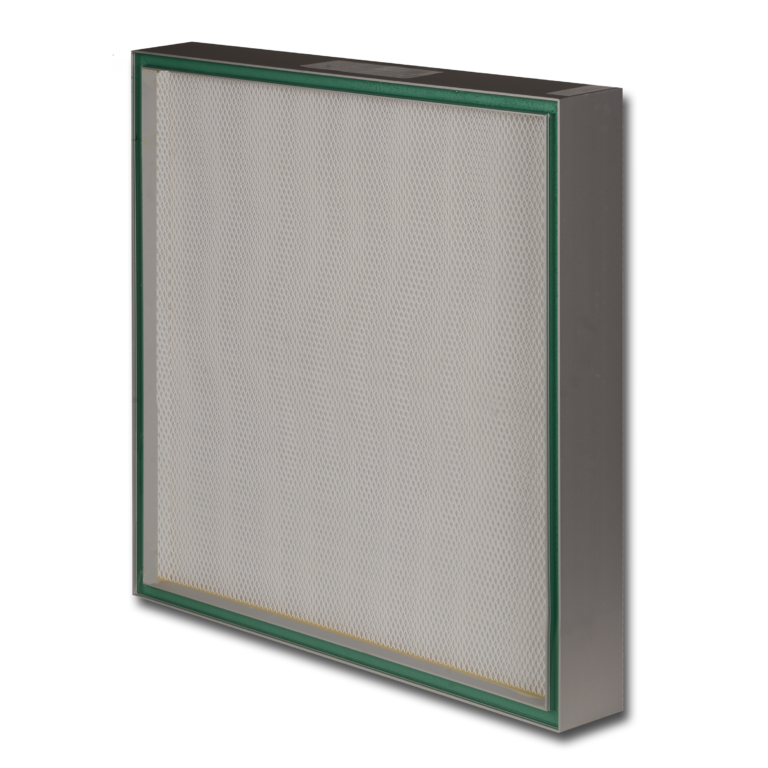
EN 1822, a European standard, provides a detailed classification system for HEPA and ULPA filters based on their filtration efficiency and ability to capture particles of various sizes. Its test methods (the efficiency test and the leak test, including the scan method) have been defined in EN ISO 29463 Parts 2–5 since 2019.
ISO 29463, on the other hand, is an international standard that was derived from and is largely harmonized with EN 1822. It consists of a series of standards (ISO 29463-1 to ISO 29463-5) that cover the general requirements, test procedures, performance classification, and marking of HEPA and ULPA filters in a global context. The purpose of ISO 29463 is to establish a uniform international standard, making it easier for manufacturers and customers to compare and select filters that meet their specific needs.

BS EN 1822-1: 2019 – High efficiency air filters (EPA, HEPA and ULPA) –
Part 1: Classification, performance testing, marking
This part of standard applies to high efficiency particulate and ultra-low penetration air filters (EPA, HEPA and ULPA) used in the field of ventilation and air conditioning and for technical processes, e.g. for applications in clean room technology or pharmaceutical industry. It establishes a procedure for the determination of the efficiency on the basis of a particle counting method using a liquid (or alternatively a solid) test aerosol and allows a standardized classification of these filters in terms of their efficiency, both local and integral efficiency.
ISO 29463: International Test Standard for HEPA Filters
Derived from EN 1822, ISO 29463 originally defined 13 filter classes, from ISO 15 E to ISO 75 U (the 2024 edition added ISO 05 E and ISO 10 E). In Europe, EN 1822-1:2019 “Classification, performance testing, marking” remains in force. It keeps the EN 1822 classes (E10–U17), while the test methods come from EN ISO 29463 Parts 2–5, which replaced EN 1822 Parts 2–5. The two standards differ mainly in leak testing.
EN 1822-1 is stricter: group H filters are leak tested with the reference scan method or the oil thread test, group U filters with the MPPS scan method only, and the aerosol photometer is not allowed. ISO 29463 also accepts the photometer as an alternative for classes ISO 35 H–45 H. EN 1822-1 (clause 7.3) uses a liquid test aerosol and allows a solid aerosol such as PSL as an alternative for leak testing; PSL is rarely used in practice because it is costly.
As mentioned earlier, ISO 29463 keeps the EPA, HEPA and ULPA groups of EN 1822. Its evaluation is also based on efficiency at the MPPS (Most Penetrating Particle Size), the particle size at which a filter’s efficiency is lowest.
The first editions of ISO 29463 started with filter class ISO 15 E, which matches EN 1822 class E11, so there was no ISO counterpart for EPA class E10. The 2024 edition of ISO 29463-1 added class ISO 05 E (≥ 85%), which has the same threshold as E10. ISO 16890 covers general ventilation filters with an ePM1 efficiency of up to 99%; because ePM1 efficiency and MPPS efficiency are measured differently, an ISO 16890 group is not equivalent to an EN 1822 class.
EN ISO 14644-1
ISO 14644-1 defines the classification of air cleanliness in cleanrooms and associated controlled environments exclusively in terms of concentration of airborne particles. Only particle populations having cumulative distributions based on threshold (lower limit) particle sizes ranging from 0.1 µm to 5 μm are considered for classification purposes.
Cleanroom Classification