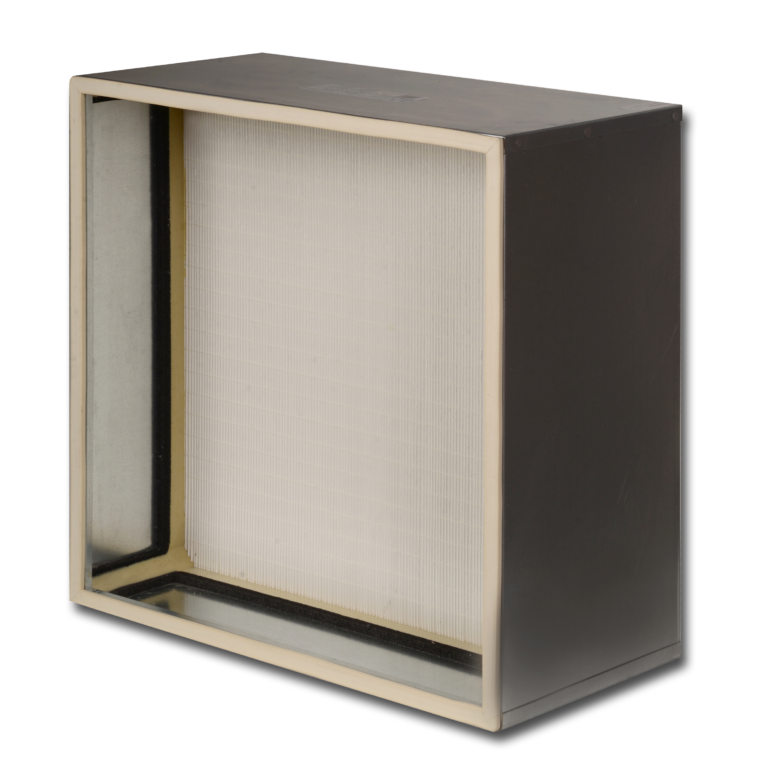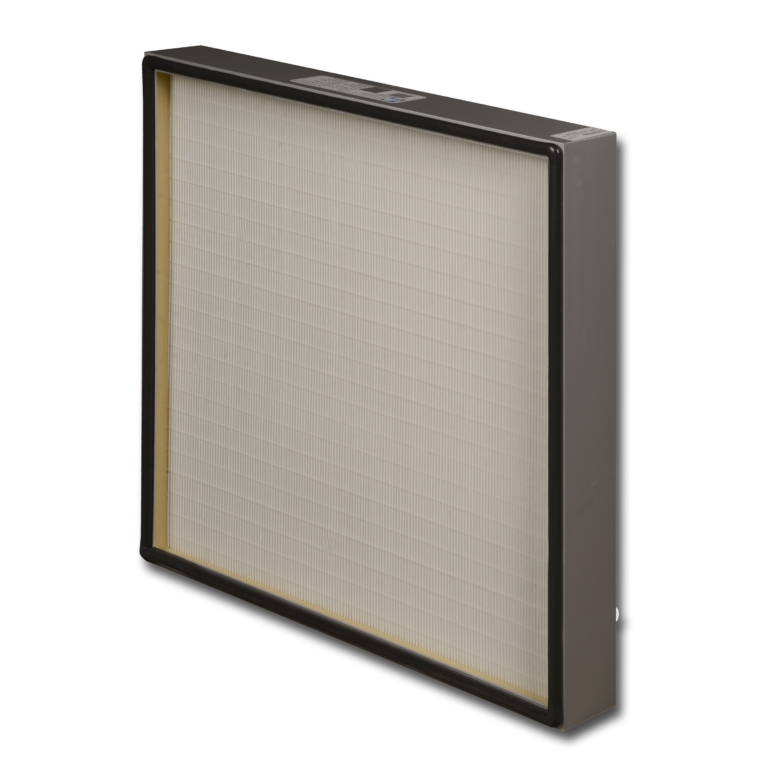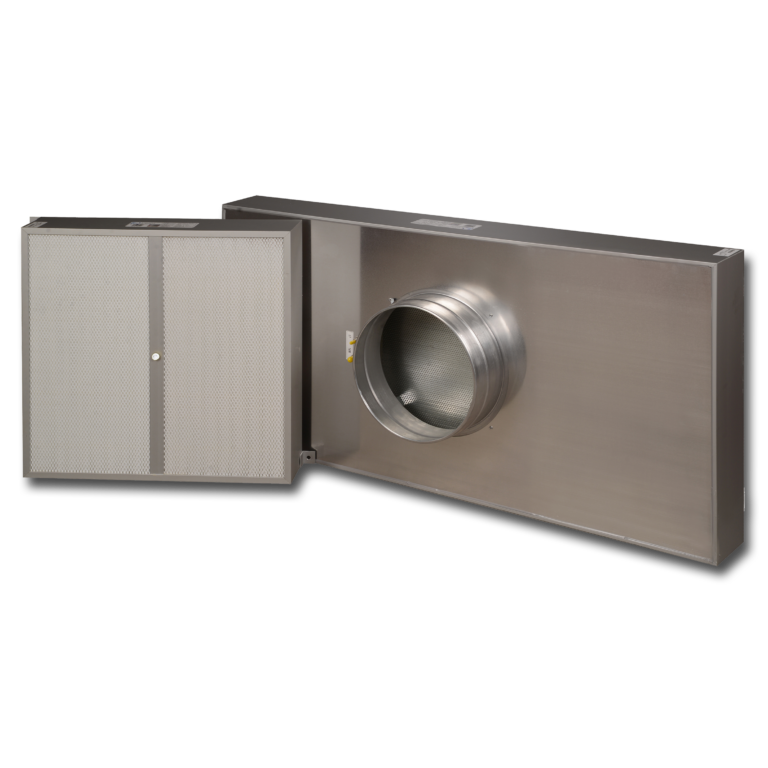
A HEPA filter should be replaced when it reaches its specified change criterion, when its resistance prevents the system from delivering the required airflow, or when a defect cannot be corrected within the permitted procedure. A failed installed integrity test requires investigation and corrective action immediately; a low pressure drop does not make that failure acceptable.
There is no single replacement interval that fits every HEPA installation. A lightly loaded terminal filter and a filter exposed to a failed prefilter can have very different service lives. The decision needs evidence that this particular filter can stay in service.
Three checks, three different jobs
Pressure drop, elapsed time and integrity testing answer different questions. Treating one as a substitute for the others creates avoidable mistakes.
| Check | What it tells you | What it cannot tell you on its own |
|---|---|---|
| Pressure drop at a known airflow | The installed resistance and how it changes as the filter loads | Whether there is a small local leak or whether the installation meets its cleanliness requirement |
| Service history and elapsed time | Whether a scheduled limit, exposure limit or maintenance obligation has been reached | Whether the filter is intact simply because it is relatively new |
| Installed integrity test | Whether the installed filter system meets the test's specified leakage criteria | Whether the fan can deliver enough air, distribute it correctly or run at an acceptable cost |
Scroll the table sideways to see all columns →
The distinction is practical. FDA's aseptic-processing guidance separates efficiency testing from installed leak testing and also calls attention to airflow performance. CDC's healthcare ventilation guidance calls for pressure monitoring, inspection and maintenance according to the manufacturer and the installation's requirements. The checks work together. FDA, aseptic-processing guidance, section IV.D.2; CDC, environmental infection control, Filter Maintenance.
What “twice the initial pressure drop, maximum 600 Pa” actually means
For its metal-frame high-capacity HEPA filter with a single pleat, Ulpatek's published technical catalogue recommends a final pressure drop of twice the initial value, capped at 600 Pa. That is a product recommendation, not a universal HEPA rule. Use the current data sheet and agreed operating conditions for the exact filter supplied. Ulpatek Product Technical Catalogue, page 206.
Where that recommendation applies, the arithmetic is:
Recommended final pressure drop = the lower of 2 × initial pressure drop and 600 Pa.
Illustrative values make the cap easier to understand:
| Initial pressure drop at the specified airflow | Twice the initial value | Product recommendation after the 600 Pa cap |
|---|---|---|
| 125 Pa | 250 Pa | 250 Pa |
| 250 Pa | 500 Pa | 500 Pa |
| 350 Pa | 700 Pa | 600 Pa |
Scroll the table sideways to see all columns →
The 600 Pa figure is a ceiling within this recommendation. It is not permission to run every filter to 600 Pa. A filter with a 125 Pa starting resistance does not acquire an extra 350 Pa of useful life because another line in the catalogue mentions 600 Pa.
There is also a system limit. Suppose the recommendation gives 500 Pa, but the fan can no longer maintain the required airflow above 430 Pa. The installation has reached its limit first. Waiting for 500 Pa would mean operating below the airflow requirement.
Agree which initial value the maintenance plan uses: the manufacturer's value at the stated duty or an accepted commissioning baseline. Record the airflow with it. Do not keep redefining the baseline after each adjustment to postpone replacement.
A pressure reading without an airflow reading can mislead you
Filter resistance depends on airflow. If the airflow falls, pressure drop may also fall even though the filter is still loaded.
Imagine a maintenance record showing 180 Pa last month and 160 Pa today. That looks reassuring until the airflow log shows that the fan is now delivering much less air. The filter has not cleaned itself. The measurement conditions have changed.
To follow the change over time, record:
- Filter identification and installation date.
- Airflow or the verified operating mode at the time of measurement.
- Pressure drop across the HEPA stage itself.
- Fan speed or control setting where available.
- Prefilter condition and any recent maintenance or unusual exposure.
Check where the pressure taps are connected. A reading across a prefilter, coil and HEPA filter combined cannot tell you which component is responsible for the increase. A blocked tube, loose connection or incorrect instrument zero can also send a maintenance team toward the wrong component.
Fan and system operation have to be considered together. The US Department of Energy's fan-system sourcebook explains how restrictions, fouling and poor system configuration affect airflow and operating cost. DOE, Improving Fan System Performance.
A failed integrity test takes priority over the pressure trend
“The pressure drop is still low” is not an answer to a failed leak test. A local defect can pass a small amount of unfiltered air without producing a useful warning on the pressure gauge.
First locate the failure. It may involve the media, the bond between the media pack and frame, the gasket, the housing seating surface, or the test arrangement. Replacing the filter will not necessarily correct a defective housing interface. This is the reason to distinguish the filter element from the installed assembly. See The HEPA Filter Isn't Leaking — Your Housing Is.
Handle the failure under the site's approved deviation procedure. Do not return the affected installation to qualified service until the required corrective action and verification are complete. Repairing a local defect, replacing the filter and correcting a seal are different actions. Each needs to be permitted for the application. The applicable test procedure, filter manufacturer and facility quality system determine which is acceptable. FDA, section IV.D.2.
After the correction, verify the affected performance again. In an aseptic application, a passing factory certificate cannot close a failure found in the installed system. For critical production, the investigation should also assess whether the failure could have affected product already processed, and document which batches or processes fall within its scope. EU GMP Annex 1, paragraphs 3.1(iii) and 3.2.
Six-month requalification does not mean six-month replacement
EU GMP Annex 1, paragraph 4.32, sets maximum requalification intervals of six months for Grade A/B areas and twelve months for Grade C/D areas. That requalification includes final-filter integrity testing among other checks. The intervals concern requalification, not an instruction to discard every HEPA filter at those ages. European Commission, EU GMP Annex 1, 2022, paragraph 4.32.
A site's approved maintenance programme may impose a separate replacement interval. If it does, that interval remains part of the operating requirement until it is formally reviewed. Extending service because a filter “still looks clean” is not a controlled change.
A filter can also need replacement well before the next planned date. Damage, exposure beyond the permitted temperature, persistent wetting or a process incident can require a change before the planned date. Assess what happened to the actual materials and installation, rather than treating age as the only variable.
Waiting for the maximum can cost more
The recommended final pressure drop is not automatically the cheapest replacement point. Keeping a loaded filter in service may increase fan energy; changing it creates purchase, labour, disposal and, where applicable, requalification costs.
That comparison has to use the average resistance over the operating period and the actual change frequency. Comparing two endpoints alone does not establish the lowest-cost change point. It is also essential to maintain the required airflow when evaluating energy savings: a fixed-speed system can change its airflow when resistance changes. Eurovent 4/24–2023, Update 1, sections 1–2.
In a critical production area, disruption and requalification may outweigh a modest energy saving. In an accessible AHU bank, the balance may be different. Use the numbers from the installation. The worked filter-cost example shows how to keep those assumptions visible.
A replacement decision you can document
Use the following sequence as a decision aid alongside the installation's approved procedure:
- Is the filter or installed assembly damaged, contaminated beyond its permitted condition, or failing integrity requirements? Investigate and correct the defect; do not wait for the pressure alarm.
- Can the system still maintain its required airflow and other qualified conditions? If not, identify the restriction or system fault and restore performance.
- Has the filter reached its applicable replacement pressure or a lower system limit? Follow the agreed change criterion.
- Has an approved calendar or exposure limit been reached? Apply that requirement even if the pressure trend appears satisfactory.
- If none applies, is continued use still the sensible operating choice? Review energy, the next planned shutdown, lead time and the cost of an unscheduled change.
This records why a filter was changed or kept in service. “We always change it in September” records a date. It does not explain a technical decision.
Questions that come up when planning a change
Does a low pressure drop prove that the HEPA filter is intact?
No. Pressure monitoring is useful for resistance and loading trends. A local leak, sealing defect or bypass can exist with an apparently normal reading. Integrity and airflow requirements need their own verification.
Should an H14 filter be changed more often than an H13 filter?
The class alone does not establish the interval. Filter construction, airflow, upstream protection, contamination load, exposures and the facility's requirements all matter. Compare the actual products and service conditions.
Can the factory test report replace the installed test after a change?
No. A factory report describes the filter's test before dispatch. Installation introduces handling and sealing interfaces that the factory report cannot verify. The facility must complete the checks required for its installed system.
Sources
- Ulpatek Product Technical Catalogue, September 2025, page 206.
- European Commission, EU GMP Annex 1, 2022.
- FDA, Sterile Drug Products Produced by Aseptic Processing, September 2004.
- CDC, Guidelines for Environmental Infection Control in Health-Care Facilities, Air.
- US Department of Energy, Improving Fan System Performance.
- Eurovent 4/24–2023, First Edition, Update 1, published 30 May 2024.