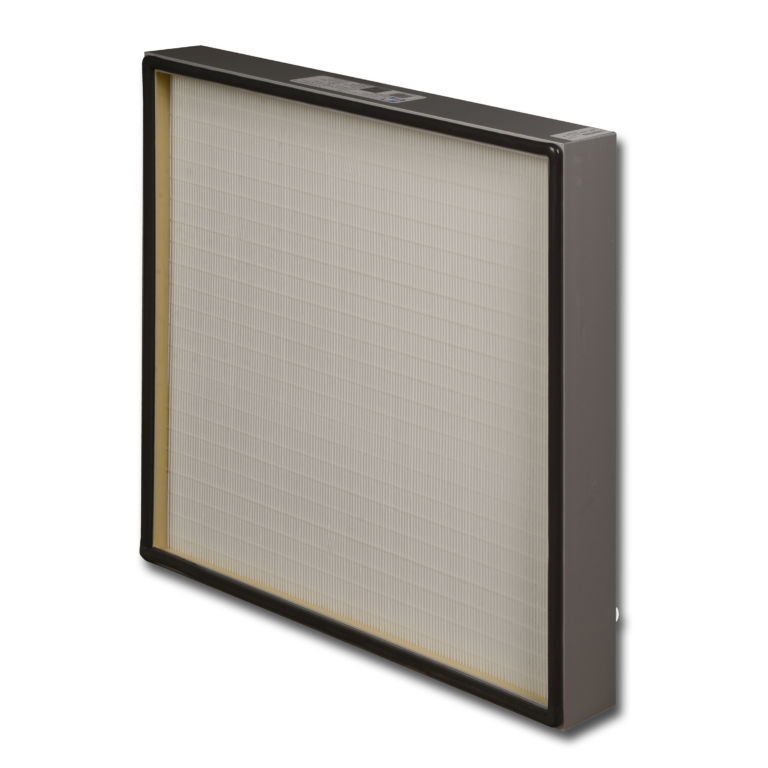
A HEPA filter certificate is one part of a pharmaceutical cleanroom's evidence. It cannot show that the installed ceiling seals correctly, that air protects the filling point or that the room remains suitable after maintenance. The revised EU GMP Annex 1 makes those connections clear.
For filter buyers, the main task is to connect the approved filter specification with qualification, the contamination control strategy and change control. A purchase order that says only “GMP filter” leaves too much unresolved.
The 2022 Annex 1 applies to the manufacture of sterile medicinal products. Most provisions came into operation on 25 August 2023; point 8.123 followed on 25 August 2024. Its principles may also be adopted for certain non-sterile products, with the applied scope documented. European Commission, Annex 1, document history and section 1
Begin with the contamination control strategy
The contamination control strategy, or CCS, connects the controls used to protect the process. Section 2.3 requires a facility-wide strategy that identifies critical control points and assesses the effectiveness of the controls and monitoring measures. Filter selection belongs within that wider reasoning. Annex 1, section 2
For an aseptic filling line, this means looking beyond the filter's efficiency. Where is product exposed? How does air reach that location? What can interrupt the protective flow? How will the filter and its seal be tested after installation? What happens if a replacement has different resistance?
These questions help the design and quality teams turn a general cleanliness goal into an orderable component. They also explain why two filters carrying the same class may need a formal substitution review. Their frame, seal, dimensions or resistance may affect the qualified arrangement.
Does Annex 1 require H14 everywhere in Grade A and B?
Annex 1 does not provide a simple table assigning H13 or H14 to every GMP grade. It calls for appropriate filtered air and for the environment to meet its intended requirements. The design team must choose and justify the filter specification within the complete system. Annex 1, sections 4.1 and 4.23–4.25
H14 may be an approved project requirement. If it is, the buyer should preserve it. The point is to record the correct basis: the approved design or specification, rather than an invented universal sentence in Annex 1.
EN 1822 and ISO 29463 classify the filter element. GMP grades describe controlled manufacturing environments and associated requirements. Neither a class-conversion chart nor a cleanroom particle count makes those two systems identical. EN 1822-1 scope, ISO 29463-1:2024
Keep the factory report and installed test together
The factory report supports acceptance of the filter supplied. Installed leakage and integrity testing addresses the assembled filter system after transport, handling and installation. The seal to the housing is part of that installation.
Annex 1 section 4.25 includes installed filter-system leakage and integrity testing among qualification activities. It also includes airflow, pressure differences and other relevant checks. Passing one of those checks does not complete the others. Annex 1, section 4.25
The installed-test method needs its own protocol, equipment and acceptance criteria. ISO 14644-3 covers cleanroom test methods, while IEST-RP-CC034 addresses several HEPA/ULPA leak-test situations. The test team should select the applicable method before arriving on site. ISO 14644-3:2019, IEST-RP-CC034 scope
For the buyer, a practical handover record links the filter serial or identification, its factory document, installed location and site result. If the terminal is called T-014 on the ceiling drawing, that reference should be easy to find in the maintenance file. A folder full of unlinked PDFs makes later investigations unnecessarily slow.
Six months is a requalification limit
Section 4.32 sets maximum requalification intervals of six months for Grade A/B and twelve months for Grade C/D. The minimum requalification package includes final-filter integrity, room classification, airflow volume and room pressure differences, with velocity or recovery testing as applicable. Annex 1, section 4.32
These intervals are not instructions to discard every HEPA filter at six or twelve months. Replacement and requalification are different decisions. A serviceable filter may remain in place if the approved maintenance and qualification requirements are met. A damaged or failed filter may need action much sooner.
Avoid writing “annual HEPA maintenance” as one undivided task in the maintenance system. Separate the due dates for inspection, qualification, instrument checks and any planned replacement. Record the reason when replacement is required: integrity failure, damage, insufficient airflow, an approved resistance limit or another justified trigger.
A filter change can trigger further qualification
Annex 1 expressly includes changes of final filters among examples of special maintenance to consider through change management. Appropriate requalification is also required following relevant changes or corrective work. The significance of the change determines the work needed; the routine calendar is not the only trigger. Annex 1, section 4.32
Consider an illustrative replacement that fits the same opening and meets the same H14 requirement, but has a different pressure-drop curve. The installation may need adjustment to restore the approved flow. That adjustment can affect nearby terminals or the room pressure balance. Quality and engineering should agree the assessment and release checks before the shutdown begins.
If the replacement follows an integrity failure, the investigation also needs to address the period before detection and possible product impact. Installing a passing replacement resolves a hardware issue; it does not, by itself, close the quality investigation.
Give each document a clear purpose
| Record | What it should help the team decide |
|---|---|
| Approved filter specification | Is the offered class, construction and operating duty suitable? |
| Factory test report | Does the identified supplied filter meet the agreed factory acceptance basis? |
| Receiving and installation record | Was the correct item received, protected and installed in the correct location? |
| Installed integrity result | Does the installed filter system pass the selected leakage method? |
| Airflow and room qualification results | Does the system still produce the required conditions? |
| Change-control and release record | Has the impact been assessed and the area approved for its intended use? |
Scroll the table sideways to see all columns →
This table is a practical document structure. It is not a substitute for the site's validation plan or the full Annex 1 requirements.
A useful file also records deviations. A test report should not disappear simply because a later retest passed. Keep the original finding, corrective action and approved conclusion connected so the history remains understandable.
Plan test access while the system is still on paper
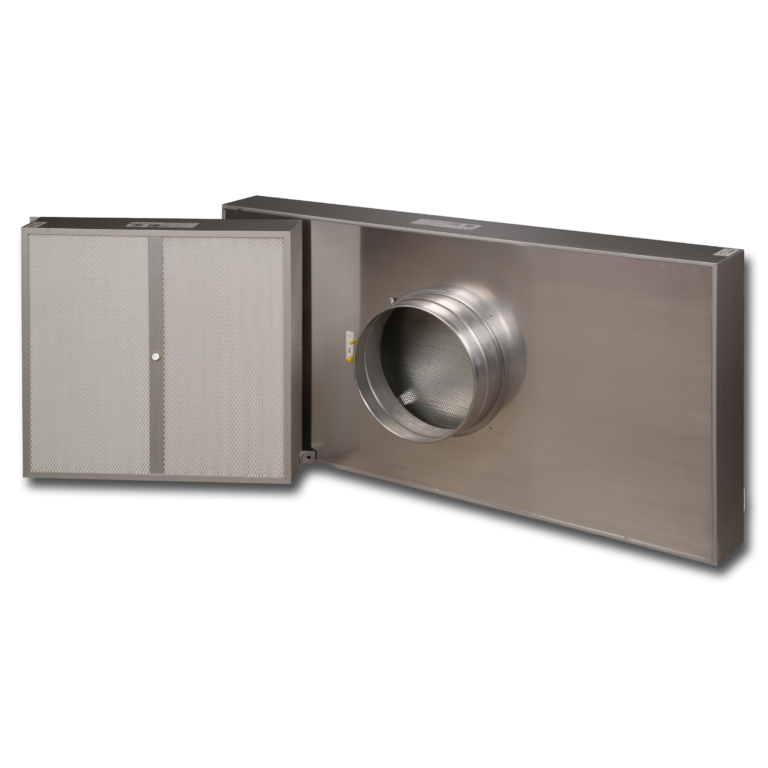
Test access is a procurement issue because missing ports, poor access to the downstream face or an unsuitable housing arrangement can make later qualification difficult. Ask the designer and test provider to review those details before purchasing terminal equipment.
The same review should cover access for replacement, safe handling, identification labels and the space needed around the housing. A compact installation that blocks inspection can create years of maintenance problems.
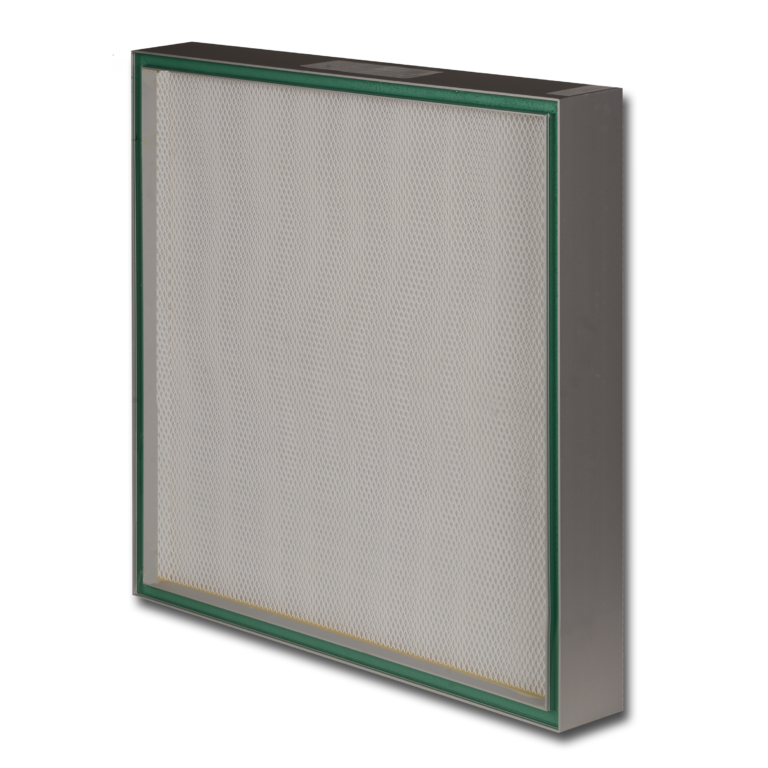
Ask for evidence that addresses the actual construction. If a different gasket, frame material or sealant is proposed, review its fit and compatibility with the intended cleaning or decontamination environment. A general material description does not answer every compatibility question.
What to include in a pharmaceutical filter enquiry
ULPALAB tests Ulpatek's own manufactured filters before shipment. The pharmaceutical site and its appointed specialists remain responsible for installed testing, qualification and release. Defining those responsibilities early gives every document a useful place in the final package.
Does a passing room particle count replace an integrity test? No. They assess different aspects of the installation.
Does every filter change require a complete redesign? No. It requires an appropriate documented change assessment and the resulting checks. A like-for-like replacement and a changed construction may lead to different assessments.
What should an older qualification file be reviewed against? The current applicable Annex 1 requirements, the approved CCS and the actual installed system. Preserve valid historical evidence while closing specific gaps in traceability, testing and change control.